How it works
A token, start to finish.
Eight steps. The first four take a few minutes. The rest happen as people trade.
- 01
Pick a town: Devnet or Mainnet
Padville is two towns. Devnet is for practice. Its SOL comes from a faucet and is worth nothing, so you can launch, trade and lock as much as you like. Mainnet is the real one.
The switch is in the top left corner of the town. The two towns share nothing: a token launched on one does not exist on the other.
- 02
Connect a wallet
Phantom, Solflare, Backpack or any other Solana wallet. Set the wallet itself to the same network as the town, or its balance will look wrong. Padville never holds your funds: every action is a transaction you sign.
- 03
Pick a district
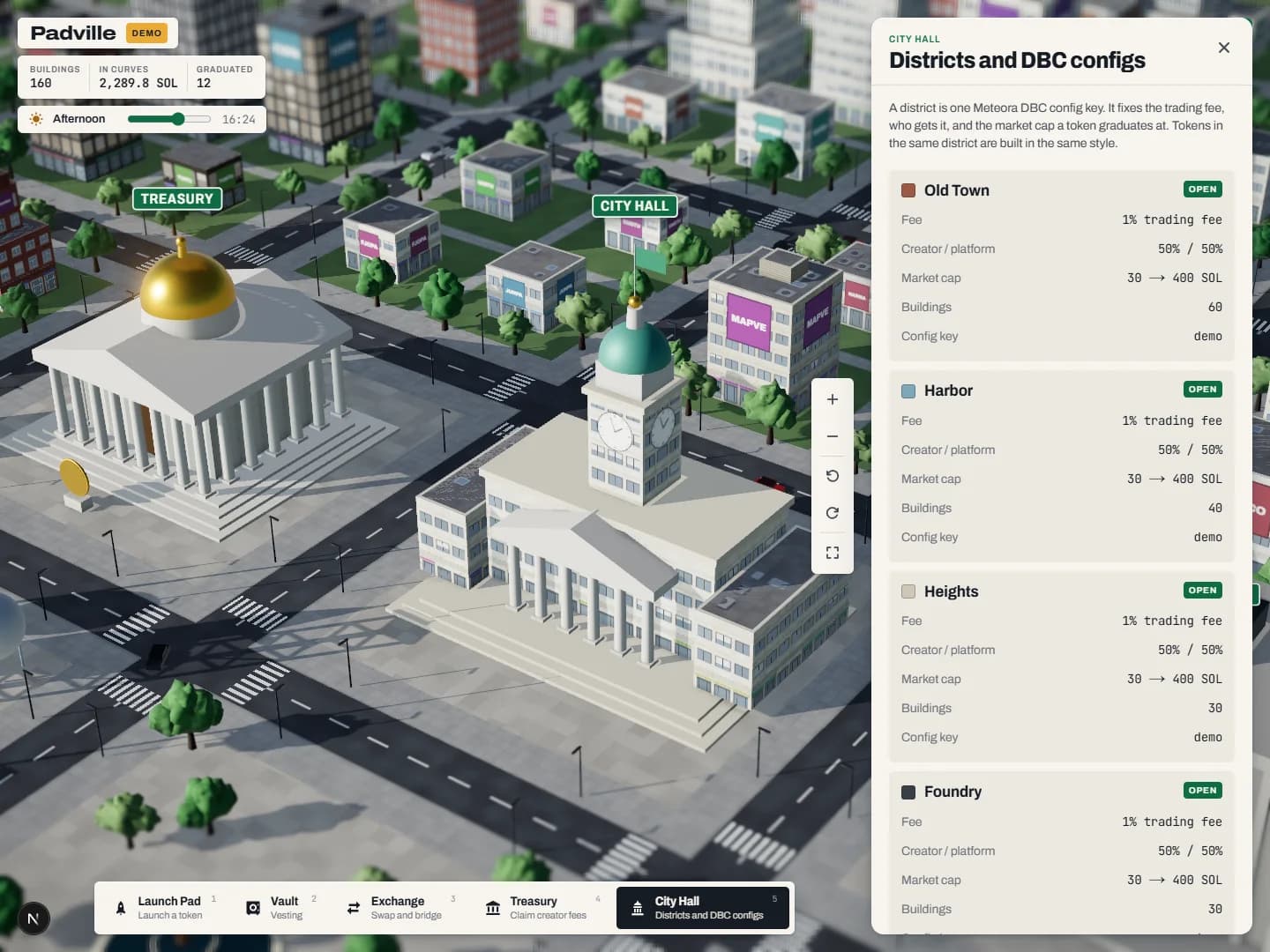
A district is a set of rules that every token in it follows. It sets two things:
- The trading fee. Either a flat rate, or a high opening fee that falls in the first seconds. A falling fee makes it expensive to snipe a launch: a Standard district opens at 99% and is at 2% after 30 seconds.
- The graduation target. The market cap at which the bonding curve is full.
The split of the fee is not up to the district: Meteora keeps 20%, and the rest goes 50/50 to you and Padville. A district Padville opened itself may give you more; the Launch Pad shows what you keep in each.
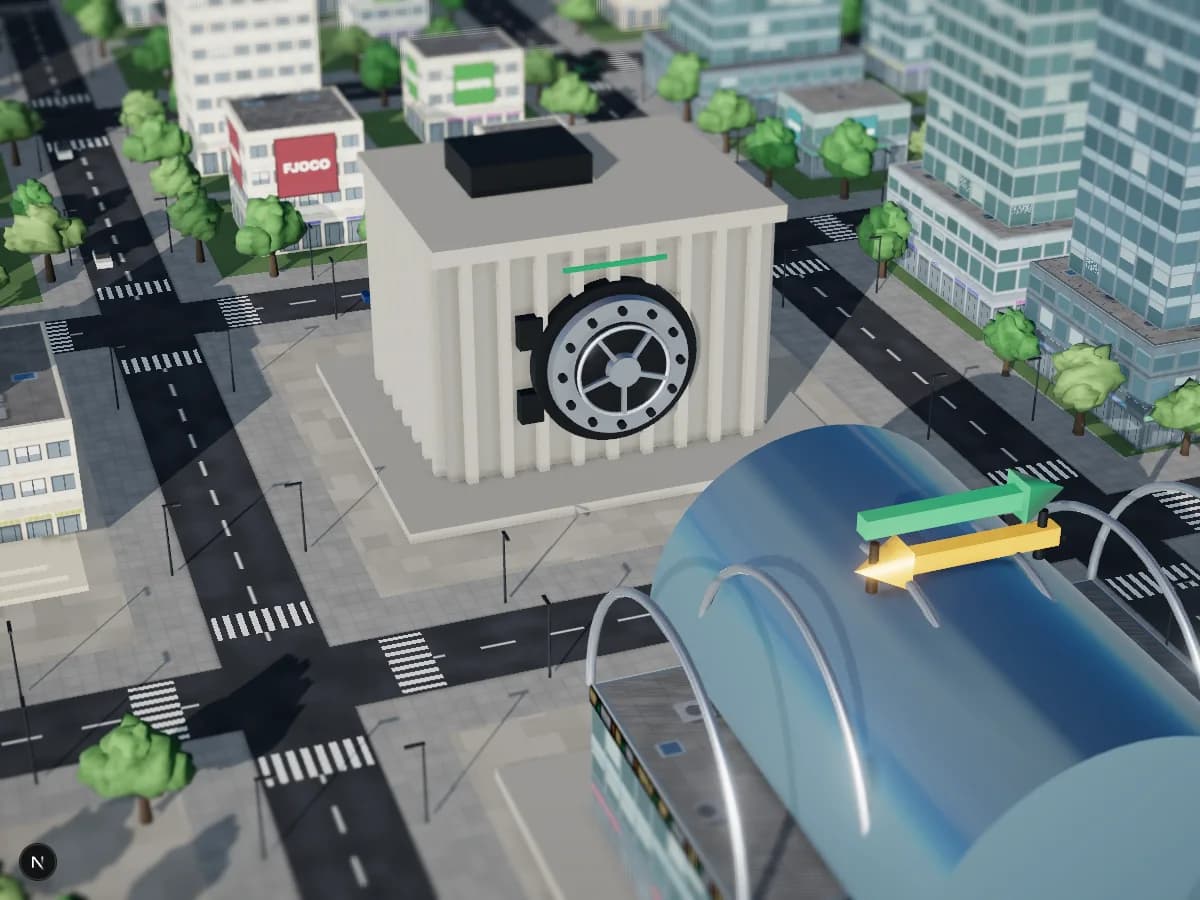
A district's rules are written on chain when it opens and can't be changed after. Each district also has its own architecture, so you can tell them apart from the air.
If none of them suits your token, choose Your own rules at the Launch Pad and set the fee and the graduation target yourself. The launch opens a new district first; it costs about 0.006 SOL more, and anyone can then launch there. City Hall can open one too, without launching.
- 04
Launch at the Launch Pad
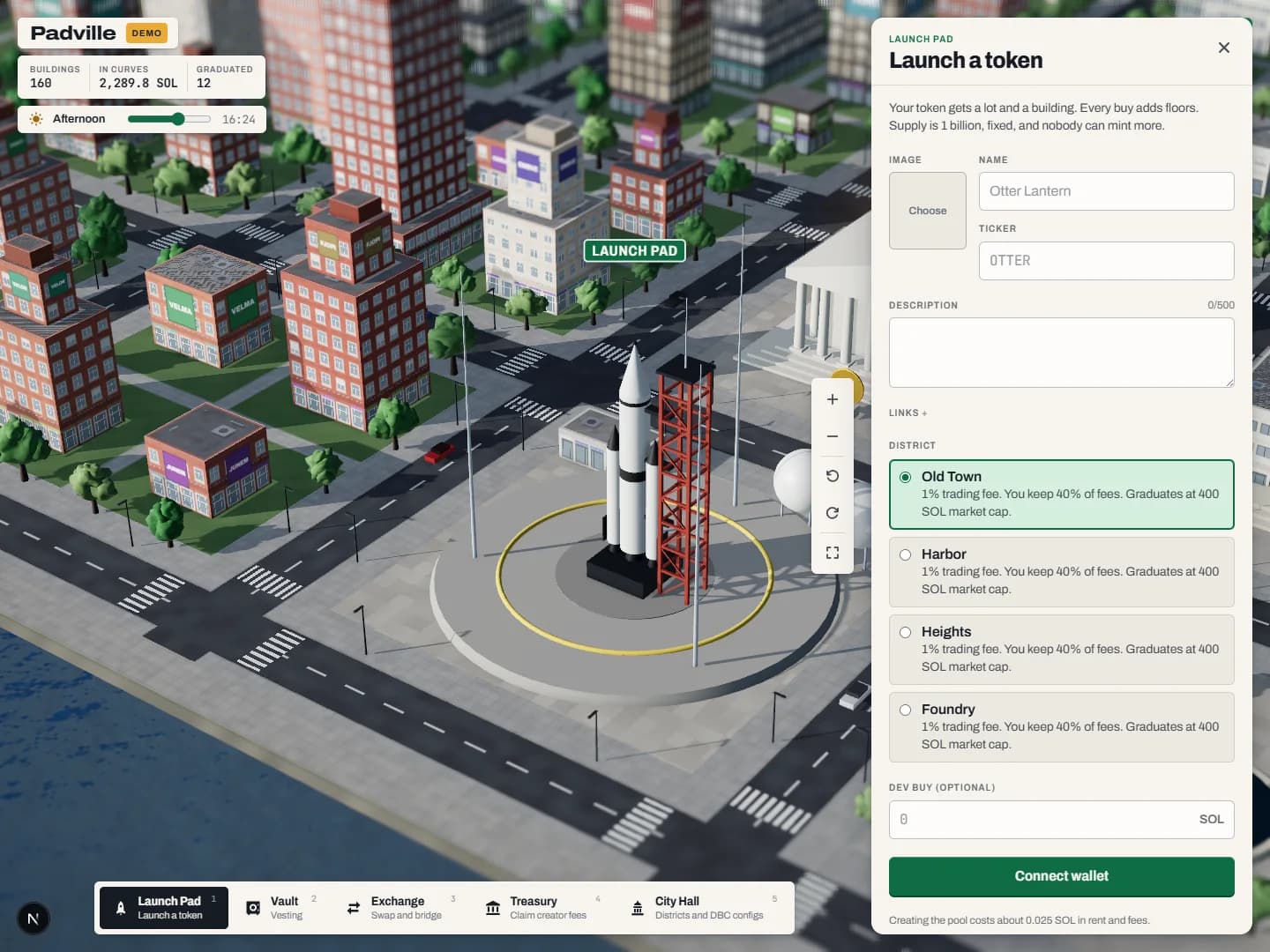
Give the token an image, a name and a ticker. Supply is 1 billion with 6 decimals, and the mint authority is thrown away at creation: nobody can ever make more.
You can add a dev buy: an amount of SOL that buys in the same transaction that creates the token, so nobody can get in ahead of you. It pays the district's settled fee, not the opening one, and it is capped at 10% of supply. You can also lock what you bought, for 1 to 12 months.
Creating the pool costs about 0.025 SOL in rent and network fees. Padville adds no launch fee.
- 05
Your building goes up
The token takes the next free lot in its district. It starts 2 storeys high. Every buy puts SOL into the bonding curve, and the building's height is that curve drawn in floors: about 15 at the halfway mark, 28 just before the top.
Your token's image hangs on all four sides, lit at night. Anyone can click the building to see its numbers and trade it.
- 06
Graduation
When the curve is full, the token graduates. Its liquidity moves into a Meteora DAMM v2 pool and is locked for good: it can't be pulled. The building becomes a skyscraper with a spire and a warning light.
From then on the token trades in that pool, through the Exchange or anywhere Jupiter routes.
- 07
Claim your fees at the Treasury
Your share of every trading fee collects on chain in SOL. Connect the wallet you launched with, open the Treasury and claim, as often as you like. After graduation the fees come from the locked pool position instead, and the Treasury shows both.
- 08
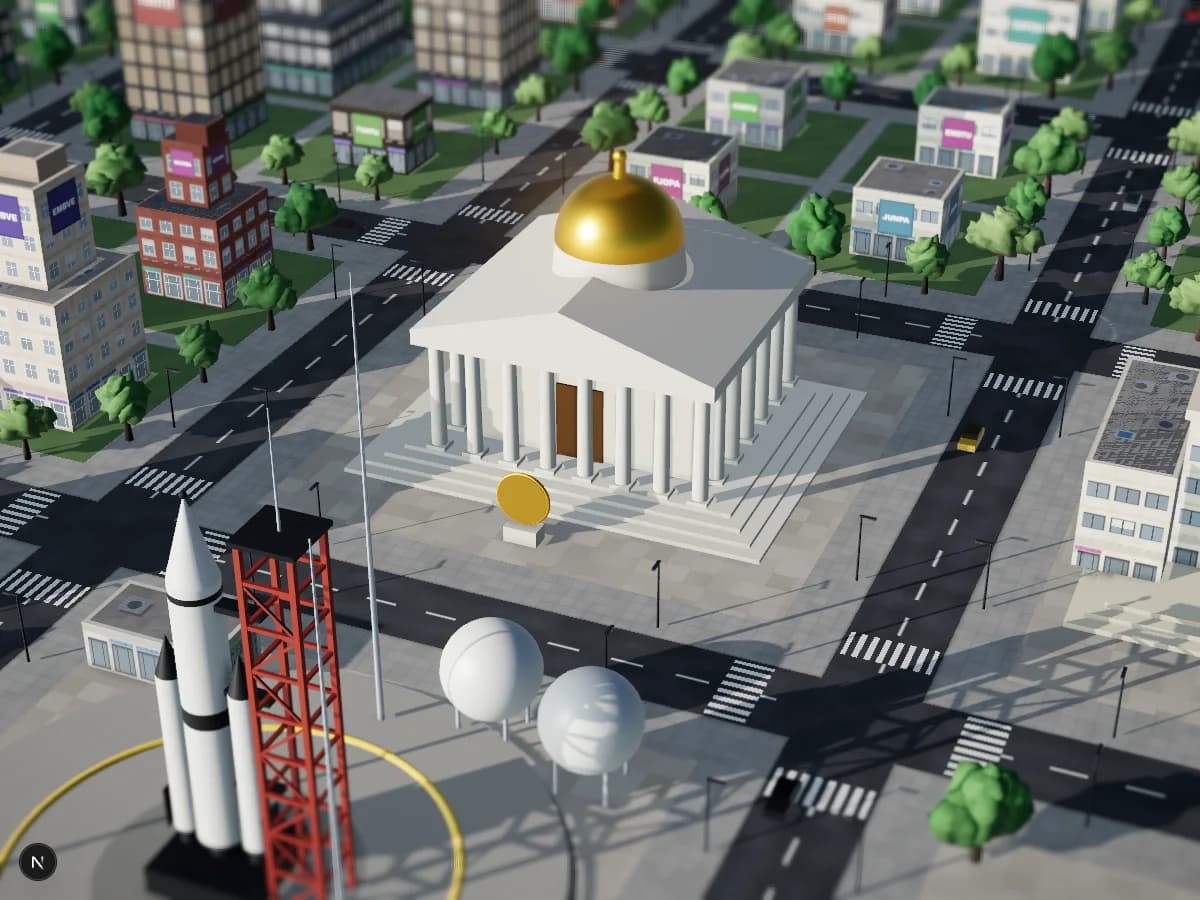
Lock tokens at the Vault
A lock holds tokens until a date (a cliff) or releases them a little every day. It runs on Jupiter Lock. Once made, nobody can cancel it or change who receives the tokens, which is the point: holders can check it. Locks you make, and locks that pay you, are listed at the Vault.